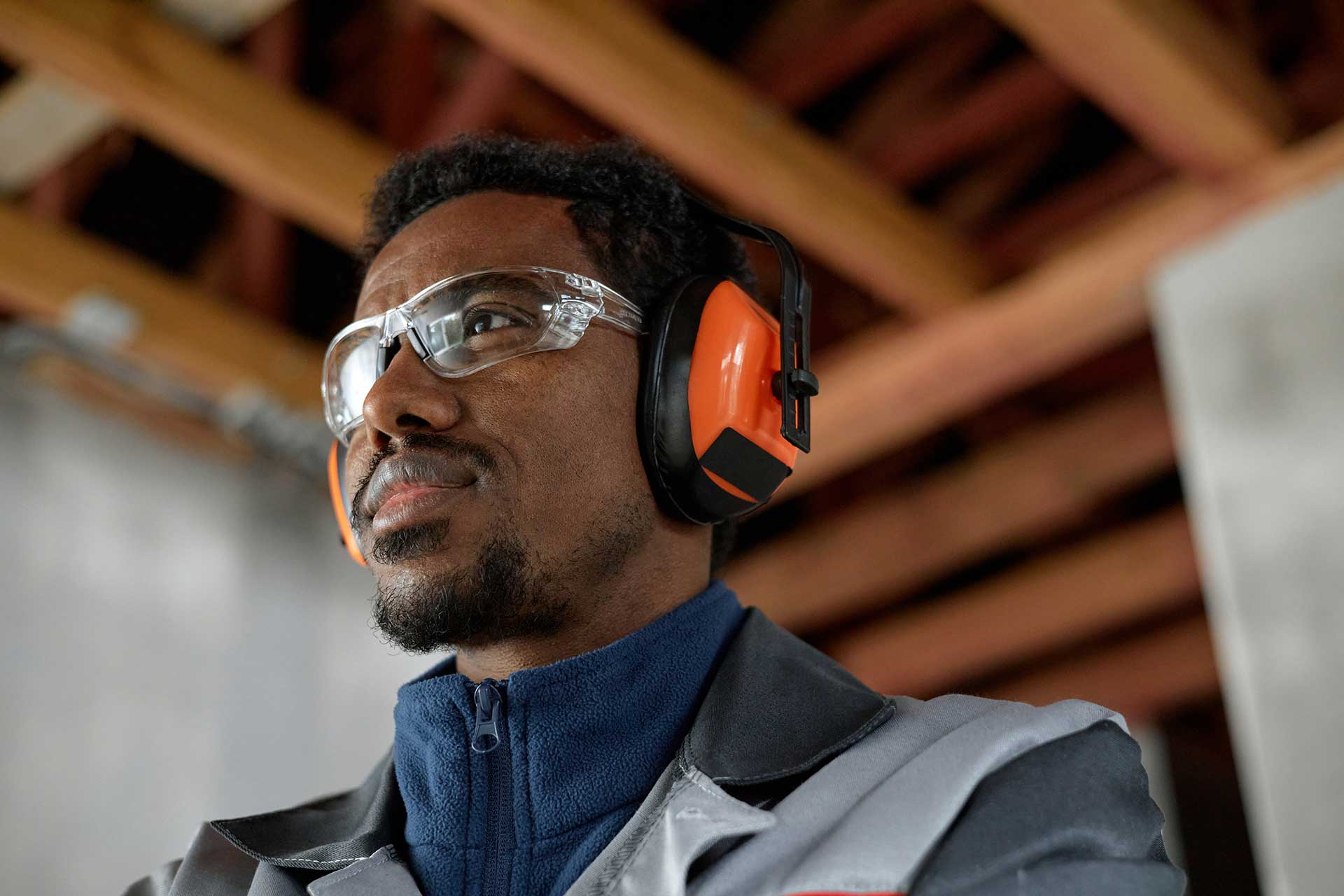
Workplace noise isn’t just background sound, it’s a health and safety issue with lasting consequences. Long-term exposure to hazardous noise can lead to permanent hearing loss, reduced concentration, fatigue, and increased incident risk. For employers in manufacturing, distribution, auto repair, and other high-noise industries, effective noise monitoring isn’t optional, it’s essential.
This article breaks down what OSHA requires when it comes to noise monitoring, explores best practices that go beyond compliance, and outlines regulatory and industry changes that could impact your current program. Whether you're building a noise monitoring strategy from scratch or looking to strengthen an existing program, understanding these components is essential to protecting your workforce and staying compliant.
Understanding OSHA Requirements for Workplace Noise Monitoring
Occupational noise exposure is regulated under OSHA’s Hearing Conservation Standard. If an employee’s 8-hour time-weighted average (TWA) exposure reaches or exceeds 85 decibels (dBA), employers are required to take action. This threshold is known as OSHA’s Action Level, and crossing it triggers mandatory elements of a Hearing Conservation Program.
At or above the Action Level, employers must:
- Conduct baseline noise monitoring to identify exposure levels
- Provide annual audiometric testing to monitor employee hearing health
- Notify affected employees of their exposure
- Offer hearing protection at no cost
- Maintain clear documentation for all program elements
Several types of equipment are commonly used to meet monitoring requirements:
- Sound Level Meters (SLMs) provide spot measurements in specific areas.
- Noise Dosimeters are worn by employees to measure personal exposure throughout a shift.
- Octave Band Analyzers help identify specific frequencies contributing to high noise levels, valuable for targeting engineering controls.
All devices used for measurement must be calibrated before and after use, and at least annually, to ensure accuracy. Monitoring should be repeated whenever there are significant changes in equipment, operations, or layout that could affect noise levels.
Smarter Noise Management: Going Beyond the Minimum
While OSHA compliance is critical, relying solely on minimum requirements may leave gaps in worker protection. A smarter approach to noise monitoring involves strategic planning, ongoing evaluation, and the proactive use of technology.
Start with the Hierarchy of Controls
The most effective way to manage noise is to reduce or eliminate it at the source. Engineering solutions, such as barriers, dampeners, or quieter equipment, should be prioritized. Administrative controls like shift rotation or limited time in high-noise zones can also reduce exposure. Personal protective equipment (PPE), such as earplugs or earmuffs, should be the final layer of defense, not the first.
Map out exposure risks across your facility
Conduct comprehensive noise surveys using both SLMs and dosimeters. Include different work shifts, operational conditions, and maintenance cycles to capture fluctuations. Don’t assume noise levels are consistent throughout the day or across all roles.
Leverage Smart Monitoring Tools Where Risk Is High
In areas with elevated or fluctuating noise levels, continuous monitoring can offer a more reliable picture of exposure. Fixed or semi-permanent sensors enable real-time data collection and can alert safety managers when thresholds are exceeded—supporting faster intervention. Cloud-connected devices and smart dosimeters further streamline data capture, allow for remote access, and offer analytics that help identify trends over time. While GMG doesn’t currently offer AI-based tools, we recognize their emerging role in predictive modeling and advanced noise management.
Employee engagement is critical
Even the best equipment won’t make a difference if hearing protection isn’t used correctly or consistently. Provide training on proper PPE use, and ensure protection fits well and is appropriate for the job. Just a few minutes without protection in a high-noise zone can compromise an employee’s hearing over time.
Reassess When Conditions Change
Noise monitoring isn’t a one-and-done task. OSHA requires reassessment whenever there are changes in production, equipment, processes, or controls that could increase noise exposure. Even without major changes, it’s smart to schedule periodic reviews to confirm your program remains effective. Reviewing monitoring data, calibration logs, and employee feedback helps ensure your strategy stays up to date and compliant.
What’s Changing: Regulatory Shifts and Industry Trends
Noise regulations are evolving. In some regions, new standards are being introduced to strengthen worker protections.
- In the United States, recent changes to the National Environmental Policy Act (NEPA) now require each federal agency to create its own noise assessment procedures, introducing new variables for employers working on federally funded projects.
- Local governments are tightening ordinances around data centers, warehousing, and other industrial operations, especially where community noise complaints are increasing.
There’s also a growing recognition of the broader health effects of occupational noise. Studies now link chronic exposure not just to hearing loss, but also to stress, fatigue, and cardiovascular risks. As these findings gain traction, businesses may see increased pressure to adopt more protective standards, voluntarily or through regulation.
Internationally, ISO standards such as ISO 1996 and ISO 20906 are shaping expectations for long-term monitoring and data quality. These standards emphasize uncertainty analysis, integrated documentation, and continuous measurement, helping companies build more resilient compliance programs.
Key Steps to Strengthen Your Noise Program
A well-run noise program balances compliance and practicality. Here’s how to keep yours on track:
- Know your exposure: Use personal and area monitoring tools to identify problem areas and roles at risk.
- Be proactive: Don’t wait until levels exceed 85 dBA. Begin controls and monitoring when exposure approaches the Action Level.
- Choose scalable tools: Select monitoring systems that meet your needs now but can expand as your operations grow.
- Train your team: A noise program only works when your workforce is involved. Educate employees on noise risks, PPE, and reporting procedures.
- Track regulations: Stay informed about federal, state, and local updates so your program remains compliant as standards evolve.
How GMG EnviroSafe Can Help
Managing occupational noise requires more than meters and reports, it takes a strategic partner who understands your operations and builds solutions that fit. At GMG EnviroSafe, we help you:
- Conduct professional noise assessments using calibrated, compliant equipment
- Develop customized monitoring strategies that align with your operational needs
- Maintain clear, comprehensive documentation for OSHA and internal audits
- Deliver bilingual employee training to support correct hearing protection use
- Keep your program current with ongoing regulatory guidance
You don’t have to navigate compliance alone. We’re here to help you reduce noise risks, protect your employees, and create a safer, more productive workplace. Your peace of mind is our priority.
Ready to assess your noise exposure? Contact GMG EnviroSafe today to schedule a professional evaluation. Let’s build a safer future together.
Share & Print this article