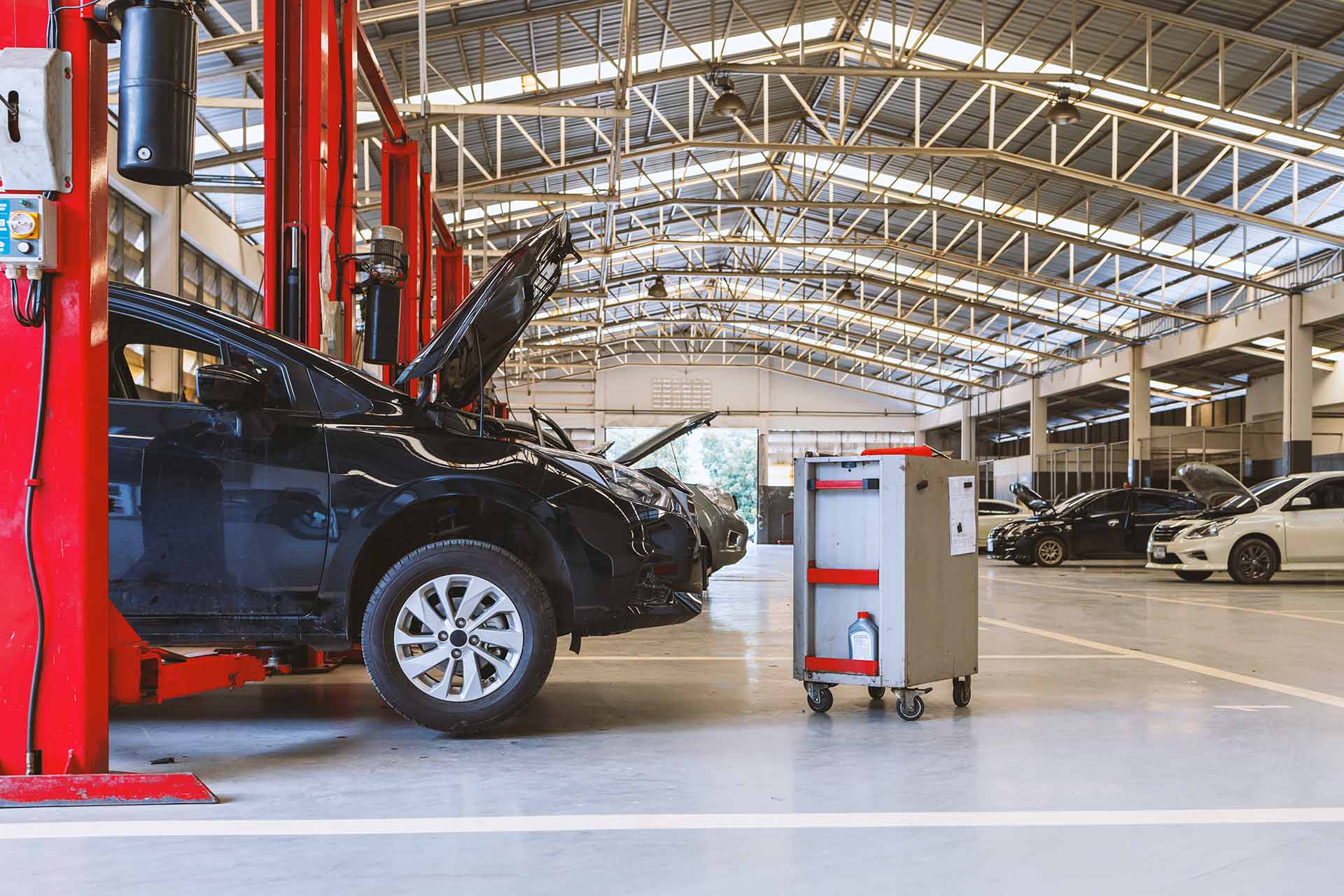
Ergonomic Injury Risks in Automotive Service Bays: How to Protect Your Technicians
Identifying MSD Risk Factors in Auto Repair Shops and Building Practical Controls That Work
Musculoskeletal disorders (MSDs) are one of the most common and costly injury types in automotive service bays. They don't come from a single event. They build over time from the daily combination of heavy lifting, awkward postures, repetitive tool use, and vibration exposure that define the work (1). For shop owners, the impact goes beyond safety. MSDs drive workers' comp claims, lost productivity, technician downtime, and turnover, making them one of the biggest controllable costs in the business.
Auto technicians routinely bend, twist, reach overhead, kneel, and work in constrained spaces while handling heavy components like wheels, transmissions, exhaust systems, and batteries. Research using posture assessment tools on automotive maintenance tasks has found that many common activities fall into high-risk categories requiring intervention (6). The good news is that most of these exposures are visible, measurable, and fixable with practical controls and better job setup.
Common Ergonomic Risk Factors in Auto Repair Shops
The main ergonomic risks in automotive service bays align with well-documented MSD risk factors: awkward posture, repetition, force, duration, vibration, and contact stress (1)(2).
Awkward and sustained postures are constant in bay work. Under-dash tasks force technicians into extreme neck flexion and trunk twisting. Overhead work on suspension, exhaust, and steering stresses shoulders and neck. Under-vehicle tasks involve reaching above shoulder height or far from the body. Wheel and brake work means repeated kneeling, squatting, and forward bending.
Forceful exertions and heavy loads are unavoidable without the right equipment. Manual lifting of wheels, tires, batteries, brake components, and driveline parts can exceed safe handling limits. High torque demands when loosening seized fasteners add sustained grip forces on top of awkward positioning.
Repetition and duration compound the problem. Shops running high volumes of tires, brakes, and oil services create repeated reaching, twisting, and tool cycling across a full shift. Long periods in constrained postures during diagnostics reduce recovery time for muscles and joints (2).
Vibration and contact stress round out the picture. Prolonged use of impact wrenches and grinders exposes hands and arms to vibration that contributes to hand-arm disorders over time (7). Leaning on hard vehicle edges, creeper rails, or concrete floors creates localized pressure that compounds tissue irritation.
Environmental and organizational factors also play a role. Cold conditions increase muscle stiffness and strain risk. Tight Deadlines, especially in flat-rate environments, incentivizes skipping lift assists and safer setups.
Most Common Musculoskeletal Injuries in Auto Technicians
The injury pattern in service bays is consistent: low back strains from lifting, twisting, and working below waist height; shoulder and neck strain from overhead work and arms-forward postures; knee pain from repeated kneeling and squatting; and wrist and hand symptoms from forceful, repetitive tool use and vibration (3).
These injuries affect muscles, nerves, tendons, ligaments, and related tissues (3). When these exposures go unaddressed, strain accumulates, experienced technicians end up on restricted duty or leave, and shops lose the production capacity and institutional knowledge that's hardest to replace. When they're controlled through better equipment and work organization, injury rates and lost workdays decline.
Ergonomic Controls for Auto Repair Shops That Actually Work
The strongest approach follows a layered hierarchy: engineering controls first, then administrative controls, then work practices.
Engineering controls deliver the highest impact because they permanently reduce exposure:
- Use vehicle lifts to position work between knee and shoulder height whenever possible.
- Provide lift assists for heavy components: tire and wheel lifts, transmission jacks, engine hoists, and adjustable support stands.
- Invest in low-vibration, well-balanced power tools and keep them maintained to reduce required force.
- Use adjustable padded stools and quality creepers to reduce kneeling and floor contact stress.
- Store frequently used tools and parts at waist height to minimize bending and overhead reaching.
These changes don't just reduce injuries. They also improve productivity because technicians waste less energy fighting the job.
Administrative controls and job design support the engineering changes:
- Rotate tasks so one technician isn't performing the same high-strain work all shift.
- Schedule heavy lifts when equipment is available and normalize two-person lifts.
- Set realistic time expectations that include setup time for safe positioning.
- Encourage early reporting of discomfort so setups can be adjusted before minor strains become chronic (1).
Training should focus on how the shop actually works: recognizing ergonomic risk factors, correct use of positioning aids, keeping loads close, and using micro-breaks as a supplement to engineering changes (1).
OSHA Ergonomic Compliance for Auto Repair Shops
There is no standalone OSHA ergonomics standard, but OSHA can use the General Duty Clause to cite ergonomic hazards when they are recognized, serious, and feasible to correct (4)(5). For an automotive shop, a pattern of recurring injuries tied to known tasks, combined with a lack of available controls, can create enforcement and liability exposure.
Guidance from both OSHA and NIOSH emphasizes structured ergonomics programs that identify risk factors, involve workers in solution design, and track MSD trends (1)(3).
Automotive Service Bay Ergonomic Support from GMG EnviroSafe
GMG EnviroSafe works alongside automotive service facilities to build ergonomic programs that are practical and designed for real shop conditions.
Our support commonly includes:
- Service bay ergonomic assessments covering common tasks like tire changes, brake work, under-dash diagnostics, exhaust, and engine bay repairs.
- Engineering control planning with a curated solutions library including lifts, stands, jacks, tool layouts, and low-cost fixes for smaller shops.
- Task-specific training and toolbox talks for technicians on tire handling, under-dash work, overhead positioning, and early symptom recognition.
- Supervisor tools for spotting high-risk setups and responding to early discomfort reports.
- MSD tracking and corrective action support to measure improvements and maintain compliance documentation.
The goal is a program that reduces strain injuries, lowers workers' comp exposure, improves technician retention, and keeps your bays running productively.
If you'd like support evaluating ergonomic risk in your service bays or building an MSD prevention program, GMG EnviroSafe is here to help.
---
Sources
(1) National Institute for Occupational Safety and Health (NIOSH). (2024). About Ergonomics and Work-Related Musculoskeletal Disorders. https://www.cdc.gov/niosh/ergonomics/
(2) National Institute for Occupational Safety and Health (NIOSH). (2024). Step 1: Identify Risk Factors. https://www.cdc.gov/niosh/ergonomics/
(3) Occupational Safety and Health Administration (OSHA). Ergonomics: Overview. https://www.osha.gov/ergonomics
(4) Occupational Safety and Health Administration (OSHA). Ergonomics: Standards and Enforcement FAQs. https://www.osha.gov/ergonomics/faqs
(5) U.S. Government Accountability Office (GAO). (2024). Workplace Safety and Health: OSHA Should Take Steps to Strengthen Enforcement and Guidance for Ergonomic Hazards. https://www.gao.gov
(6) Abdullaha, S., et al. (2020). Posture Evaluation of the Automotive Maintenance Workers. Universiti Kebangsaan Malaysia (UKM). https://www.ukm.my/jkukm/wp-content/uploads/2020/si3/1/10.pdf
(7) Charles, L. E., et al. (2018). Vibration and Ergonomic Exposures Associated With Musculoskeletal Disorders of the Shoulder and Neck. Safety and Health at Work, 9(2), 125-132. https://pmc.ncbi.nlm.nih.gov/articles/PMC6005913/